

When dealing with pain, injury, or unexplained symptoms, doctors often recommend imaging tests to get a clearer picture of what’s going on inside your body. But with multiple options available—MRI, CT scan, and X-ray—how do you know which one you actually need?
Each test serves a different purpose, and choosing the right one can make a significant difference in diagnosing the issue quickly and accurately. In this guide, we’ll break down what each imaging test does, when it’s used, and what to expect during the process.
If you’re experiencing unexplained pain or injury and need diagnostic testing in Chicago, schedule a consultation at La Clinica today.
X-Ray: The Quick Snapshot
What It Does:
X-rays are the most commonly used imaging technique and work by passing low-dose radiation through the body to create images of bones and certain dense structures.
Best For Diagnosing:
- Fractures and broken bones
- Joint dislocations
- Lung infections (pneumonia)
- Arthritis
- Certain dental problems
When to Get an X-Ray:
If you’ve suffered a bone injury or need a fast, low-cost diagnostic test, an X-ray is often the first step. It’s quick, painless, and widely available. However, X-rays don’t provide much detail on soft tissues, so if deeper issues are suspected, your doctor may recommend additional imaging.
CT Scan: A More Detailed View
What It Does:
A CT scan (Computed Tomography) is like an X-ray on steroids. It takes multiple cross-sectional images of the body using a rotating X-ray machine and a computer to create highly detailed images.
Best For Diagnosing:
- Internal bleeding or trauma injuries
- Tumors or abnormal growths
- Lung and chest conditions
- Abdominal pain or organ damage
- Brain injuries, strokes, or blood clots
When to Get a CT Scan:
If an X-ray isn’t detailed enough, a CT scan provides a much clearer image of bones, organs, and blood vessels. It’s especially useful in emergency situations, like diagnosing internal bleeding after an accident.
What to Expect During a CT Scan:
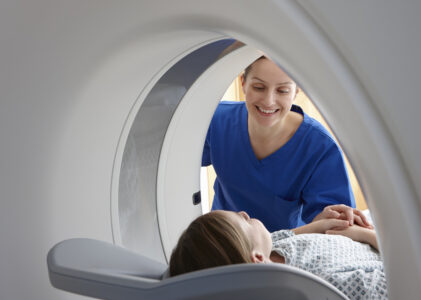
You’ll lie on a table that moves through a large, circular scanner. The process is painless and typically takes less than 10 minutes. Sometimes, contrast dye is used to highlight certain areas of the body for better visibility.
MRI: The Gold Standard for Soft Tissues
What It Does:
Unlike X-rays and CT scans, which use radiation, an MRI (Magnetic Resonance Imaging) scan uses powerful magnets and radio waves to create detailed images of soft tissues, muscles, nerves, and organs.
Best For Diagnosing:
- Spinal cord and nerve issues
- Herniated discs and back pain causes
- Ligament and tendon injuries (knee, shoulder, etc.)
- Brain and spinal cord conditions (tumors, multiple sclerosis, etc.)
- Joint problems like torn cartilage
When to Get an MRI:
If you’re experiencing chronic pain, joint instability, or neurological symptoms, an MRI is often the best choice. It provides unmatched clarity of soft tissues and nerves, making it essential for diagnosing musculoskeletal injuries and brain-related issues.
What to Expect During an MRI:
MRIs take longer than X-rays or CT scans, typically lasting between 30 to 60 minutes. Because they use magnets, you’ll need to remove all metal objects, and the machine can be noisy. Some patients feel claustrophobic, but options like open MRIs or mild sedation can help.
Which Imaging Test Is Right for You?
If you’re unsure which test you need, consider these key takeaways:
- X-Rays are fast, inexpensive, and best for bones.
- CT Scans offer a more detailed look at internal organs and trauma injuries.
- MRIs are ideal for soft tissue, nerves, and complex musculoskeletal conditions.
Conclusion: Getting the Right Diagnosis at La Clinica
Choosing the right imaging test is essential for accurate diagnosis and effective treatment. At La Clinica, we offer state-of-the-art diagnostic testing to ensure that every patient receives the right imaging for their condition. Whether you need an X-ray for a suspected fracture or an MRI for chronic pain, our experienced team will guide you toward the best solution.